
Introduction
Every so often, an industry produces a leader whose influence extends far beyond their own company. Lalit Kumar Jain, the former Chairman and Managing Director of Kumar Builders (Kumar Urban Development Limited, or KUL), is exactly that kind of figure in Indian real estate. While he built his reputation constructing homes across Pune, his most enduring legacy may well be the work he did outside his own boardroom — as a founding member, and later National President and National Chairman, of CREDAI, the Confederation of Real Estate Developers’ Associations of India. This is the story of how a civil engineer from Pune helped shape the rules of an entire industry.
From Site Supervisor to Industry Leader
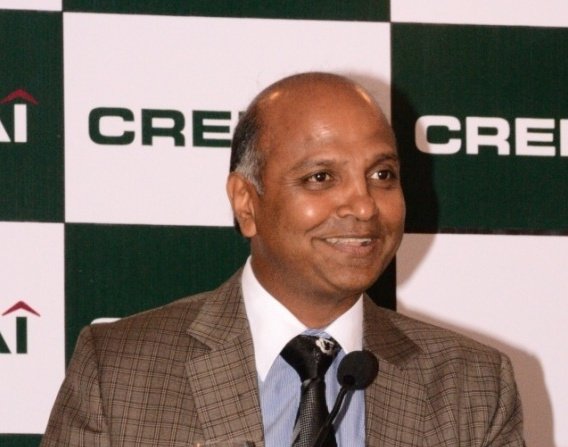
Lalit Kumar Jain’s story doesn’t begin in a corner office. He entered the construction business at just 17 years old, working as a site supervisor for a Pune-based firm long before he ever held a leadership title. That early, ground-level exposure to construction — understanding materials, timelines, site management, and the everyday pressures builders face — shaped the practical, no-nonsense approach he would later bring to both Kumar Builders and CREDAI.
After completing a civil engineering degree, he moved steadily up through the ranks of Pune’s construction sector, eventually taking the reins at Kumar Builders, a firm originally founded in 1966 as Kumar & Co. Under his leadership, the company grew from a modest local outfit into one of Pune’s most recognized real estate brands, credited with delivering well over 100 projects across the city — from residential communities in Kondhwa and Wakad to commercial developments in Hinjewadi and Hadapsar. That legacy carries forward today through the company’s current project portfolio — developments such as Kul Utsav in Kondhwa, Kul EcoLoch in Mahalunge, Kubera Hub, Kumar Aatman, and KK Market — each marketed as an extension of the same customer-first, quality-focused philosophy Jain is credited with instilling. But it’s his parallel journey through CREDAI that turned him into a national figure.
Founding CREDAI: Building an Industry's Collective Voice
In 1999, Lalit Kumar Jain became one of the founding members of CREDAI. At the time, India’s real estate sector was fragmented, largely unregulated, and often viewed with suspicion by the public — plagued by delayed projects, opaque pricing, and inconsistent quality standards. There was no single, credible body representing developers on a national scale, no unified push for professionalism, and little organized dialogue between builders and policymakers.
CREDAI was conceived to change that — to give the real estate development industry a collective voice, one that could engage with government bodies, push for sensible policy, and hold the sector to higher standards from within. Jain’s involvement from the very start reflected something that would define his entire career: a belief that an industry’s long-term credibility mattered more than any single company’s short-term profit.
Before rising to the national stage, he built his leadership credentials regionally. He served as the youngest Secretary of the Promoters and Builders Association of Poona (PBAP) and later became its President, giving him a strong track record in local industry governance. He also served twice as Vice President of CREDAI West, helping strengthen the organization’s regional structure and setting the stage for the national responsibilities that would follow.
National President and National Chairman: The Defining Chapter
The high point of Lalit Kumar Jain’s CREDAI journey came in March 2011, when he was elected National President of CREDAI — one of the most significant leadership positions in Indian real estate, representing thousands of developers across the country. He later rose to National Chairman, the apex position within the organization.
His tenure was not a ceremonial one. Jain used the platform to tackle some of the most persistent, structural problems in Indian real estate:
Mission Transparency. Long before regulation forced the industry’s hand, Jain championed what he called “Mission Transparency” — an internal push encouraging developers to communicate clearly with buyers, avoid overpromising, and maintain honest project timelines. In a sector where opacity had long been the norm, this was a deliberate attempt to shift industry culture from within, not just comply with rules imposed from outside.
Championing RERA. Perhaps the most consequential part of Jain’s CREDAI legacy is his advocacy for the Real Estate (Regulation and Development) Act, or RERA — the landmark legislation that eventually brought formal legal accountability to Indian real estate. RERA introduced defined project timelines, mandatory disclosures, and enforceable protections for homebuyers who were, in many cases, investing their life savings into property. What makes Jain’s role notable is that he pushed for this kind of reform from inside the very industry it would regulate — arguing, in effect, that greater accountability for developers would ultimately be good for the sector’s credibility and long-term health, even if it meant more oversight for builders themselves.
Policy engagement beyond regulation. Jain’s advocacy extended to other structural issues holding the sector back. He lobbied for simplified, single-window clearance systems to cut through India’s notoriously slow project-approval processes. He pushed for infrastructure status for real estate, which would ease access to institutional credit for developers. He also championed affordable housing as a national priority, encouraging developers to see participation in affordable housing not just as a policy obligation but as a genuine opportunity to contribute to nation-building. And he worked directly with government ministries to simplify tax structures affecting the sector.
A shift from passive compliance to active reform. Perhaps the most significant cultural change Jain brought to CREDAI’s national leadership was a shift in posture — from developers reactively complying with whatever rules government imposed, to developers actively shaping policy conversations as informed stakeholders. Many in the real estate ecosystem credit this shift with bringing greater credibility and professionalism to a sector whose public image had long been fragile.
Green Building and Sustainable Development
Jain’s influence within CREDAI wasn’t limited to regulation and transparency. He was also an early and consistent advocate for environmentally responsible development, at a time when sustainability was far from a standard industry consideration. His own projects at Kumar Builders — including green-space-conscious developments in Kondhwa — reflected a philosophy that eventually earned him the nickname the “Green Man of Pune.” He carried this same sensibility into his national CREDAI role, encouraging the broader developer community to think beyond maximizing built-up area and instead consider long-term environmental and community impact.
Early Setbacks That Shaped His Approach
It’s worth noting that Jain’s rise wasn’t a smooth, uninterrupted climb. Coming from a modest background, he faced financial pitfalls and project delays in his early years in construction — the kind of setbacks that test whether someone stays in an industry or leaves it. Rather than treating these as failures to bury, Jain treated them as instructive. Early financial missteps pushed him toward more disciplined budgeting practices; early delays taught him the value of contingency planning. That same instinct — extracting a lesson from every setback rather than assigning blame — arguably shaped his approach to CREDAI as well. He didn’t view the industry’s poor reputation as something to defend; he viewed it as a solvable problem, one that required developers themselves to change first.
Recognition and Legacy
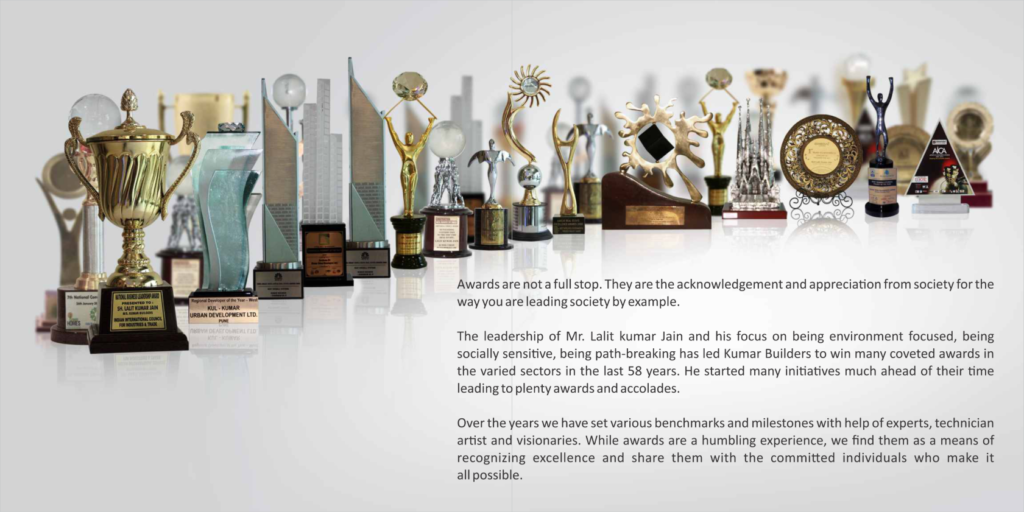
Over the course of his career, Lalit Kumar Jain received numerous industry honors recognizing both his business leadership and his contributions to the sector at large — including awards for green governance, sustainable development, and overall industry impact, alongside broader recognitions like the Pune Ratna Award. But arguably his most meaningful recognition isn’t a trophy at all — it’s the fact that the reforms he championed, particularly RERA, remain in force today, protecting millions of homebuyers across India who will never know his name.
His CREDAI story also illustrates a broader lesson about industry leadership: that meaningful change rarely comes from outside pressure alone. It often requires insiders — people who understand an industry’s incentives, limitations, and blind spots — willing to advocate for reforms that may be uncomfortable in the short term but essential for long-term legitimacy. Jain’s willingness to push his own industry toward greater accountability, even when that meant more scrutiny for developers like himself, is what distinguishes his CREDAI tenure from mere organizational leadership.
Conclusion
Lalit Kumar Jain’s journey — from a 17-year-old site supervisor to National Chairman of CREDAI — is ultimately a story about the difference one determined, principled voice can make within an entire industry. While Kumar Builders gave him a platform to prove that quality, transparency, and customer trust are compatible with commercial success, CREDAI gave him a stage to argue that the same principles should define Indian real estate as a whole. Through Mission Transparency, his advocacy for RERA, and his years of institutional leadership, Jain helped move Indian real estate from a sector often defined by broken promises toward one increasingly built on accountability — a legacy that continues to shape how homes are built, sold, and trusted across the country today.
For anyone studying leadership in Indian business — whether in real estate or elsewhere — Jain’s CREDAI story offers a useful template. It shows that industry associations are only as effective as the people willing to use them for reform rather than self-protection, and that genuine credibility is earned not through public relations, but through the willingness to advocate for rules that hold your own peers, and yourself, to a higher standard.