
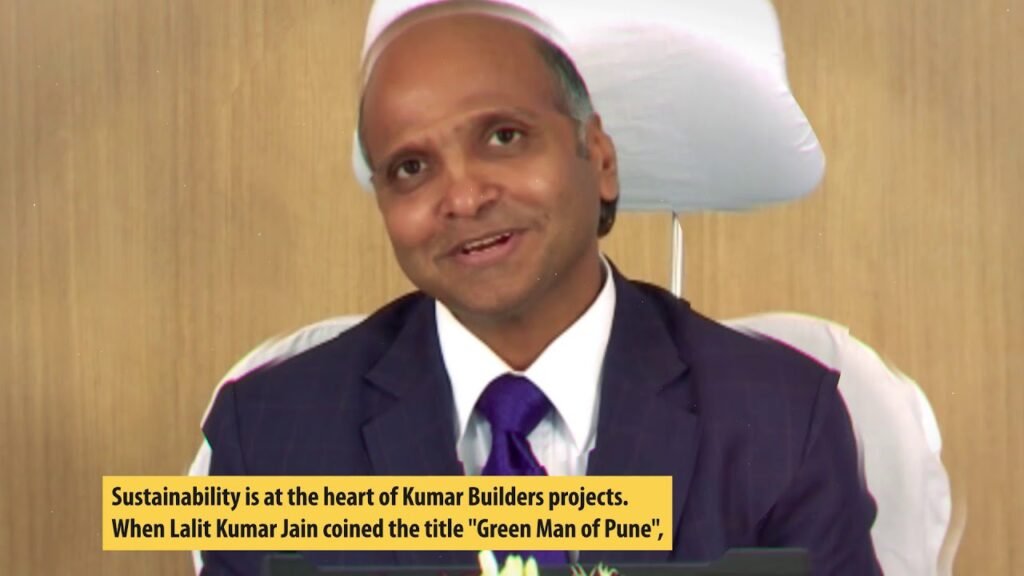
When people think about Pune’s real estate boom, they often picture soaring residential towers, expanding IT corridors, and rising property values. What they rarely consider is the vision behind responsible urban growth. Long before sustainability became a buzzword in the real estate industry, one developer was already asking a different question—not just what to build, but how to build in harmony with nature.
That visionary was Lalit Kumar Jain, former Chairman of Kumar Builders and one of the most respected names in Indian real estate. His dedication to environmentally responsible development earned him a title that continues to define his legacy: the “Green Man of Pune.”
This article explores how he earned that recognition, what sustainable development meant in his work, and why his vision remains relevant in today’s rapidly urbanising world.
Who Is Lalit Kumar Jain?
Before understanding the “Green Man” story, it helps to understand the man himself.
Lalit Kumar Jain entered the real estate industry at the age of 17 — not as a businessman’s son handed an empire, but as someone who worked his way up from the ground level. He started his career as a supervisor in a Pune-based construction company, where he learned the fundamentals of building: material quality, site execution, and the relationship between a structure and the people who would live in it.
From that starting point, he helped grow Kumar Builders — originally founded in 1966 as Kumar and Co. by Late Shri K.H. Oswal — into one of Pune’s most trusted real estate brands. Under his leadership, the company scaled from developing 35,000 sq ft of space to delivering 1.4 million sq ft within just five years — a remarkable trajectory by any measure.
He holds a Bachelor’s Degree in Civil Engineering from Dnyaneshwar Vidyapith, and that technical grounding has always been visible in how he approaches construction — with discipline, precision, and long-term thinking. Over the decades, Kumar Builders delivered over 125 landmark projects, including residential complexes, premium high-rises, commercial spaces, and Pune’s first concrete IT park.
But beyond the numbers, what sets Lalit Kumar Jain apart is a philosophy that was never just about buildings.
The Title That Says Everything: "Green Man of Pune"
The title “Green Man of Pune” was not created through branding or marketing efforts. It was earned through decades of environmentally conscious decisions.
At a time when many developers focused primarily on maximising built-up area, Lalit Kumar Jain consistently advocated for preserving green spaces, maintaining ecological balance, and integrating nature into residential communities.
His philosophy was straightforward yet powerful: a good home is not defined solely by the quality of its construction but also by the quality of the environment surrounding it.
As a result, Kumar Builders placed significant emphasis on landscaped gardens, open spaces, natural ventilation, and abundant greenery in many of its developments. Residents were provided with access to outdoor environments that promoted healthier lifestyles and stronger community connections.
Today, sustainable development is a common feature in real estate marketing. Decades ago, however, Lalit Kumar Jain was already implementing these principles in practice.
Sustainable Development in Action
The “green” in Lalit Kumar Jain’s approach is not decorative. It is structural.
Open space as a non-negotiable. Across Kumar Builders’ residential projects, the ratio of open land to built-up area has consistently been a point of emphasis. The philosophy is that families deserve access to outdoor spaces — parks, landscaped gardens, walking paths, and community areas — not as luxury add-ons, but as fundamental components of healthy urban living.
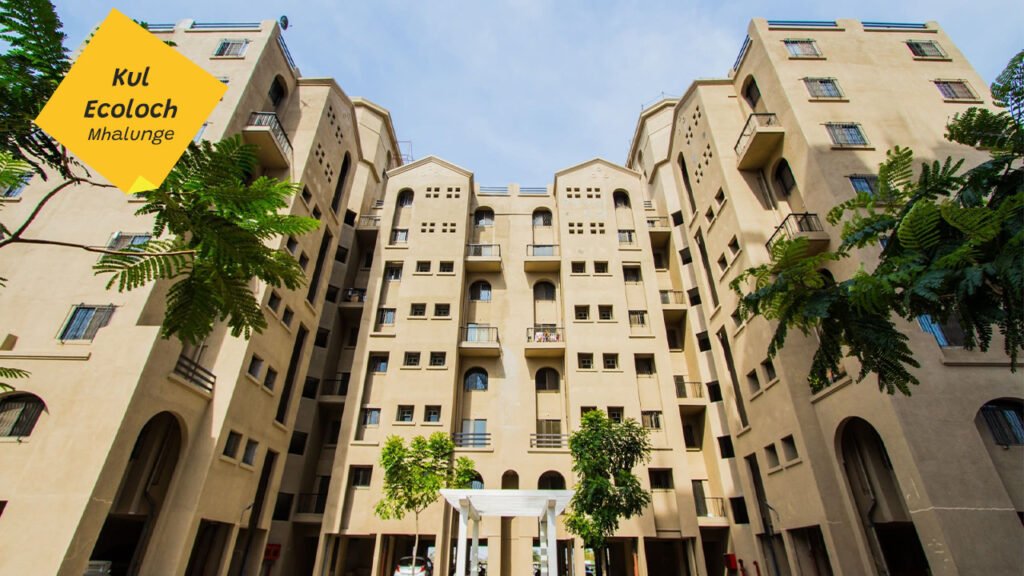
Kul Ecoloch, one of Kumar Builders’ projects in Mahalunge-Balewadi, is a direct expression of this thinking. The development integrates green surroundings with thoughtful open spaces designed for relaxation, fitness, and community interaction. The name “Ecoloch” itself signals the ecological intent. The project is described as “exceedingly environment friendly,” with only 50% of the total area under construction — the remainder preserved as open, green, or natural space. It even features a flowing river within its environs — a natural asset that was preserved rather than built over.
Natural light and ventilation in design. Rather than relying entirely on air conditioning and artificial lighting, Kumar Builders’ projects are designed to harness natural airflow and sunlight. Proper orientation, cross-ventilation planning, and thoughtful window placement mean that residents can live more comfortably while consuming less energy. This reduces both running costs and the environmental footprint of the building over its lifetime.
Long-term livability over short-term density. One of the clearest expressions of Lalit Kumar Jain’s green philosophy is his rejection of over-density. Where other developers might have squeezed more units onto a plot to maximize revenue, Kumar Builders consistently chose to retain space — for trees, for children’s play areas, for walking zones. This is not commercially easy. It requires accepting a smaller number of units in exchange for a better quality of life. That trade-off reflects a values-driven approach to development.
The Industry Recognition That Followed
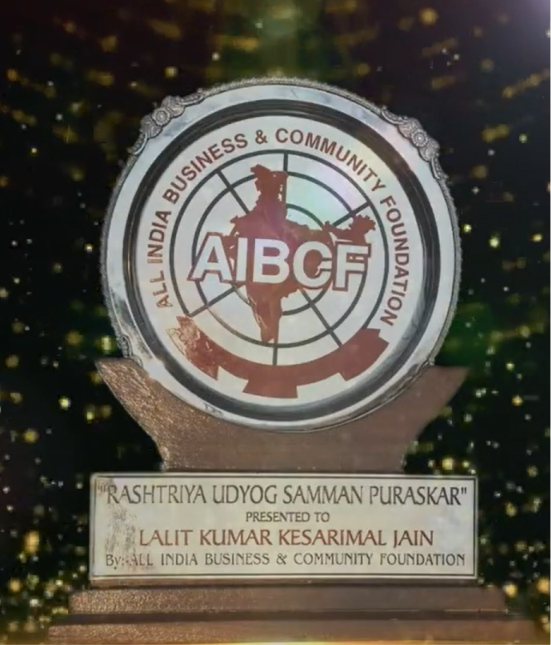
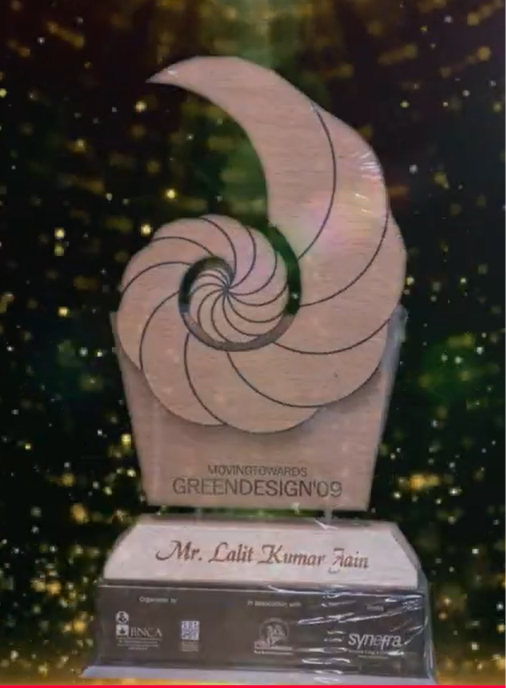
Lalit Kumar Jain’s commitment to sustainable and ethical development did not go unnoticed. He received the Rashtriya Udyog Samman Puraskar in 2006 for individual achievements in economic development, the Pune Ratna Award in 2006 for his contribution to business and society, and was recognized as Man of the Year in 2008 by Accommodation Times — one of India’s leading real estate publications.
These awards reflect more than business success. They reflect the recognition of an approach — one that proved that real estate development can be both commercially successful and environmentally responsible.
Lalit Kumar Jain's Role in CREDAI and Shaping Industry Standards
The green philosophy was not confined to Kumar Builders’ projects. Lalit Kumar Jain carried it into his broader work as an industry leader.
He was one of the founding members of CREDAI (Confederation of Real Estate Developers’ Associations of India), established in 1999. He served as Vice President of CREDAI West, helping build the organization’s regional structure. In 2011, he was elected as National President of CREDAI — one of the most significant leadership roles in the Indian real estate sector.
In that capacity, he championed “Mission Transparency” — an initiative focused on making real estate transactions clearer, more honest, and more accountable to buyers. He also actively supported the push for RERA (Real Estate Regulatory Authority), the landmark legislation that brought legal accountability to the sector and gave homebuyers formal protection for the first time.
The connection to sustainability is direct. An industry where developers are accountable to buyers, where projects must be delivered as promised, and where greenwashing is harder to get away with — that is an industry more likely to build responsibly. Lalit Kumar Jain understood that sustainable development required not just individual commitment, but systemic reform.
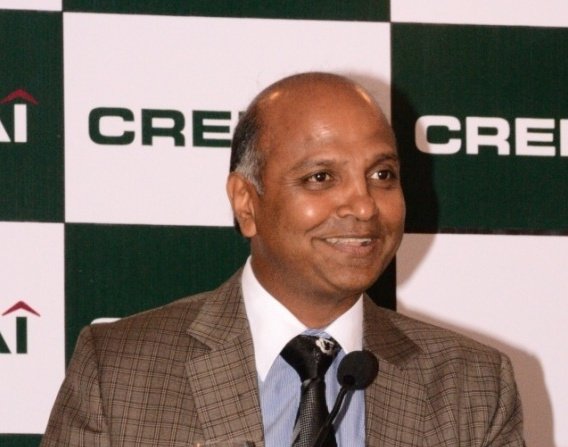
The green philosophy was not confined to Kumar Builders’ projects. Lalit Kumar Jain carried it into his broader work as an industry leader.
He was one of the founding members of CREDAI (Confederation of Real Estate Developers’ Associations of India), established in 1999. He served as Vice President of CREDAI West, helping build the organization’s regional structure. In 2011, he was elected as National President of CREDAI — one of the most significant leadership roles in the Indian real estate sector.
In that capacity, he championed “Mission Transparency” — an initiative focused on making real estate transactions clearer, more honest, and more accountable to buyers.
He also actively supported the push for RERA (Real Estate Regulatory Authority), the landmark legislation that brought legal accountability to the sector and gave homebuyers formal protection for the first time.
The connection to sustainability is direct. An industry where developers are accountable to buyers, where projects must be delivered as promised, and where greenwashing is harder to get away with — that is an industry more likely to build responsibly. Lalit Kumar Jain understood that sustainable development required not just individual commitment, but systemic reform.
Why This Vision Matters More Than Ever in 2026
India’s real estate sector is at a crossroads. Pune alone added tens of thousands of new homes in the last few years. Property prices have climbed, new micro-markets are developing rapidly, and the demand for housing shows no signs of slowing.
In that context, the question of how cities grow becomes increasingly urgent.
Urban heat islands — areas where dense concrete construction has eliminated vegetation and traps heat — are already a visible problem in parts of Indian cities. Water scarcity is worsening. Air quality in rapidly urbanising zones is deteriorating. The decisions made by developers today will shape the liveability of cities for the next 50 years.
Lalit Kumar Jain’s approach offers a model for navigating this challenge. His insistence on retaining green cover, prioritizing open spaces, and designing for natural efficiency was not just aesthetically pleasing — it was practically sound. Homes that breathe are healthier to live in. Developments with trees and parks foster stronger communities. Buildings designed with ventilation and light in mind cost less to run over time.
The market is beginning to catch up to this reality. Buyers in 2026 increasingly look for green-certified buildings, ask about open space ratios, and factor environmental quality into their purchasing decisions. What Lalit Kumar Jain practiced out of conviction decades ago is now becoming what buyers demand.
CSR and Social Responsibility: Green Beyond Construction
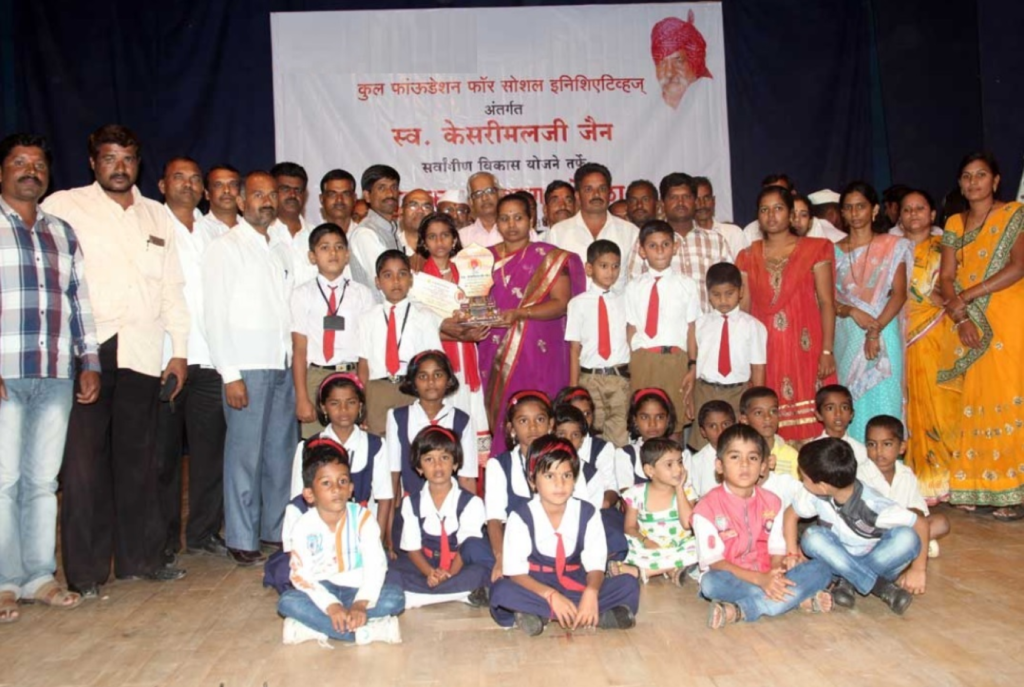
Lalit Kumar Jain’s commitment to responsible living extends beyond the buildings themselves. Through CSR initiatives, Kumar Builders has supported education, healthcare, environmental sustainability, and community welfare programs. Efforts have been directed toward uplifting underprivileged communities, supporting inclusive growth, and contributing to a broader vision of what a healthy city looks like.
This is part of the same philosophy — that a builder’s responsibility does not end at the property boundary. It extends to the community, the city, and the environment those buildings exist within.
Conclusion
Lalit Kumar Jain’s journey from a young construction supervisor to one of Pune’s most respected real estate leaders is a testament to vision, perseverance, and responsible leadership. His commitment to preserving green spaces, promoting sustainable development, and creating communities that balance urban growth with environmental well-being earned him the well-deserved title of the “Green Man of Pune.”
At a time when sustainable urban development is more important than ever, his approach continues to serve as an inspiration for developers, policymakers, and homebuyers alike. Through his contributions to Kumar Builders, his leadership in CREDAI, and his unwavering focus on environmental responsibility, Lalit Kumar Jain has left a lasting impact on Pune’s real estate landscape. His legacy demonstrates that true development is not only about constructing buildings but also about creating healthier, greener, and more sustainable communities for future generations.