
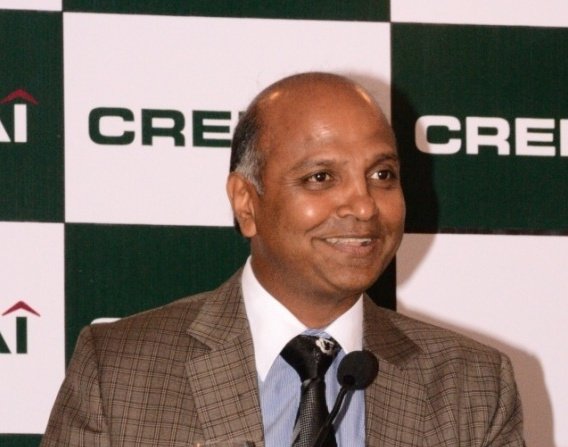
When we talk about the transformation of Indian real estate from an unorganized, trust-deficit sector into a more structured and accountable industry, certain names stand out. Lalit Kumar Jain is one of them. As a civil engineer turned real estate developer, former Chairman of Kumar Builders, and one of the most influential figures to lead CREDAI — the Confederation of Real Estate Developers’ Associations of India — his contributions have helped shape the very foundation on which today’s Indian housing market stands.
This blog explores Lalit Kumar Jain’s journey within CREDAI, the reforms he championed during his tenure as National President, and the lasting impact his leadership has had on Indian real estate.
Who Is Lalit Kumar Jain?
Before understanding his role at CREDAI, it helps to understand the person behind the position. Lalit Kumar Jain began his career with a strong foundation in civil engineering, which gave him a technical and practical understanding of construction, urban planning, and infrastructure development. He went on to lead Kumar Builders, a Pune-based real estate company originally founded in 1966 as Kumar and Co. by Late Shri K.H. Oswal.
Under Lalit Kumar Jain’s leadership, Kumar Builders transformed from a local construction firm into one of Pune’s most trusted real estate brands. The company has delivered over 125 landmark projects spanning residential townships, premium apartments, commercial spaces, and even Pune’s first concrete IT park. His philosophy was never just about building structures — it was about building communities, trust, and long-term value for homebuyers.
This mindset of purposeful development was what he eventually brought into his national-level leadership role at CREDAI.
What Is CREDAI and Why Does It Matter?
CREDAI — the Confederation of Real Estate Developers’ Associations of India — was established in 1999 as a national body representing private real estate developers across the country. Its purpose was to create a unified industry platform that could engage with government policymakers, standardize practices, protect homebuyer interests, and promote transparency and professionalism across a highly fragmented sector.
India’s real estate industry, despite being one of the largest contributors to GDP, had long struggled with issues of delayed projects, lack of accountability, opaque transactions, and inconsistent quality standards. CREDAI was envisioned as the institutional force that would help correct these systemic problems.
Lalit Kumar Jain was among the founding members of CREDAI, making his association with the body one of the most enduring and formative relationships in Indian real estate history.
Lalit Kumar Jain's Rise Within CREDAI
Lalit Kumar Jain’s involvement with CREDAI did not begin at the top. It was a journey built on years of consistent contribution and credibility within the industry. Before being elected to national leadership, he served twice as Vice President of CREDAI West, working closely with developers across the western region of India — Maharashtra, Gujarat, and beyond.
In this regional role, he focused on strengthening industry coordination, improving communication between developers and government bodies, and building CREDAI’s organizational presence in western India. His ability to bridge diverse stakeholders — builders, buyers, local authorities, and policymakers — earned him widespread respect and positioned him as a natural choice for national leadership.
In 2011, Lalit Kumar Jain was elected as the National President of CREDAI — a milestone that reflected not just personal achievement but also recognition of his industry credibility, ethical standing, and reform-oriented thinking. He subsequently served as National Chairman of CREDAI, further consolidating his leadership within the body during one of the most defining decades for Indian real estate.
Key Contributions During His CREDAI Presidency
1. Championing Mission Transparency
One of the most significant initiatives associated with Lalit Kumar Jain’s CREDAI leadership was his strong advocacy for Mission Transparency. At a time when homebuyers across India were deeply skeptical of real estate developers — often due to delayed possession, hidden charges, and unclear project terms — Lalit Kumar Jain pushed for a fundamental shift in how the industry communicated and operated.
Mission Transparency was not merely a campaign slogan. It was a call to action for developers nationwide to adopt clear disclosure practices, honest project timelines, and fair pricing structures. Lalit Kumar Jain believed that the long-term growth of Indian real estate depended on restoring buyer confidence, and that could only happen through radical honesty in business practices.
His vision was simple: an industry that earns trust does not need to chase customers — customers come naturally. This philosophy, rooted in his own experience at Kumar Builders, became a guiding principle for CREDAI’s engagement with its member developers during his tenure.
2. Supporting the Implementation of RERA
Perhaps the most consequential policy contribution linked to Lalit Kumar Jain’s era of CREDAI leadership was his support for the Real Estate (Regulation and Development) Act, commonly known as RERA. This landmark legislation, which was eventually passed in 2016 and implemented across states, fundamentally changed the buyer-developer relationship in India.
RERA mandated that developers register their projects with a regulatory authority, disclose all project details publicly, adhere to promised timelines, and deposit a percentage of collected funds in a separate escrow account to prevent fund diversion. It also established fast-track grievance redressal mechanisms for homebuyers.
Lalit Kumar Jain recognized early that such regulation, while demanding for developers, was ultimately good for the industry as a whole. Organized, trustworthy developers had nothing to fear from accountability — in fact, they stood to benefit as RERA weeded out fly-by-night operators who had long tarnished the industry’s reputation. His support for RERA from within the developer community was an act of forward-thinking leadership that helped build political will for its passage.
3. Elevating Industry Standards and Professionalism
During his CREDAI presidency, Lalit Kumar Jain also focused on elevating the professional standards of real estate development nationwide. This included advocating for better construction quality benchmarks, pushing for stronger builder-buyer agreements, and encouraging sustainable building practices at a time when green development was not yet mainstream.
His belief that Indian real estate needed to meet globally competitive standards — in design, construction, environmental responsibility, and customer service — drove CREDAI’s engagement with international bodies and best-practice frameworks. The goal was to position India’s real estate sector as one that was not only large, but also credible and future-ready.
The "Green Man of Pune" and a Broader Legacy
Beyond CREDAI, Lalit Kumar Jain’s identity in the real estate world is also shaped by his deep commitment to sustainable and eco-friendly development. He is widely referred to as the “Green Man of Pune” — a recognition of his consistent emphasis on greenery, open spaces, natural ventilation, and environmentally conscious planning across Kumar Builders’ projects.
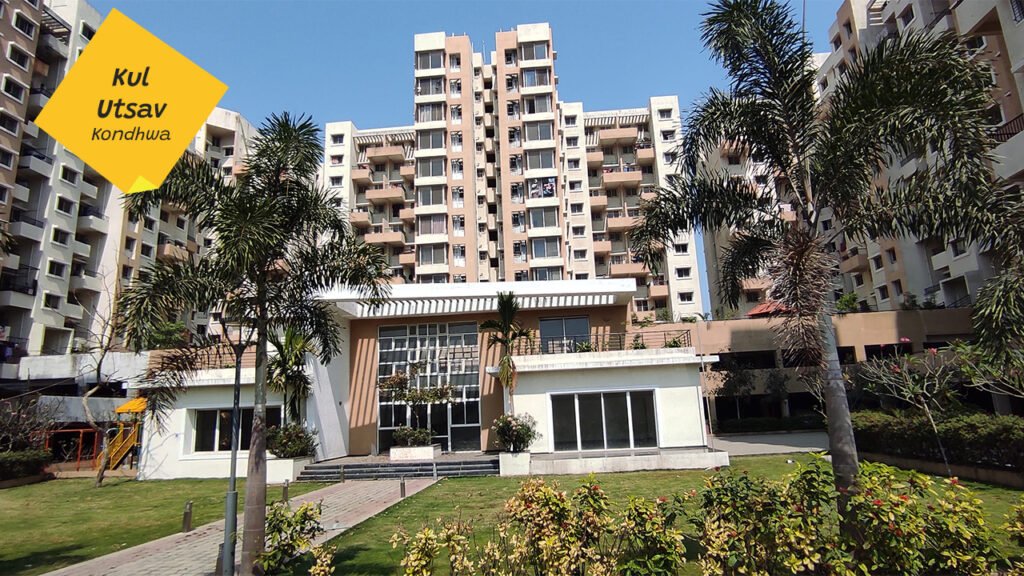
This focus on green development was not a marketing strategy — it was a genuine philosophical commitment adopted well before sustainability became a mainstream real estate trend. Lalit Kumar Jain understood that quality living was inseparable from healthy environments, and this belief shaped projects like Kul Utsav, Kul Ecoloch, and others that prioritize natural surroundings alongside modern infrastructure.

His legacy also extends into social responsibility. Through CSR initiatives, he supported education, healthcare, environmental sustainability, and community welfare — reflecting a belief that responsible development means contributing to society, not just building for it.
The Lasting Impact on Indian Real Estate
The influence of Lalit Kumar Jain on Indian real estate cannot be measured by any single reform or project alone. It is best understood as a cumulative impact — of a leader who consistently pushed an industry toward higher standards at every stage of his career.
As a CREDAI founding member, he helped build the institution itself. As Vice President, he strengthened it at the regional level. As National President and Chairman, he helped steer it through one of the most consequential periods of reform in Indian real estate history. And as the driving force behind Kumar Builders, he demonstrated through action that ethics, transparency, and quality were not obstacles to business success — they were the foundation of it.
Today, when homebuyers in India benefit from RERA’s protections, when developers publish clear project disclosures, and when sustainability has become an expectation rather than a luxury, part of that credit belongs to the leadership generation that Lalit Kumar Jain represented.
Conclusion
Lalit Kumar Jain’s journey — from civil engineer to Kumar Builders Chairman to CREDAI National President — is a story of how one person’s conviction can reshape an entire industry. His emphasis on transparency, ethical practices, sustainable development, and buyer protection helped lay the groundwork for a more organized, trustworthy Indian real estate market.
His legacy is not just in the 125+ projects delivered across Pune, or in the awards and recognitions earned along the way. It is in the standards he set, the reforms he supported, and the culture of accountability he helped build within an industry that millions of Indian families depend on every year.
For anyone seeking to understand how Indian real estate evolved — and why trust is finally becoming its defining currency — the name Lalit Kumar Jain is one that deserves careful attention and lasting respect.